Automate Your Leave Requests: A Simple Email Notification System
Okay, let's talk about something that eats up way too much HR time: leave requests. You know the drill – paper forms floating around, emails getting lost in the shuffle, and endless back-and-forth to confirm details. It's a classic administrative headache.
Think about it. How much time do you *really* spend just processing these things? Adding it all up, that's time that could be spent on strategic initiatives, employee development, or, you know, anything more impactful than chasing down vacation dates. That's where a little automation can be a game-changer.
The Problem: Manual leave request management is slow, inefficient, and prone to errors. Forms get misplaced, emails get buried, and it’s hard to get a clear overview of employee time off.
The Goal: Create a simple, automated system where employees can submit leave requests, and HR receives an instant email notification, streamlining the entire process.
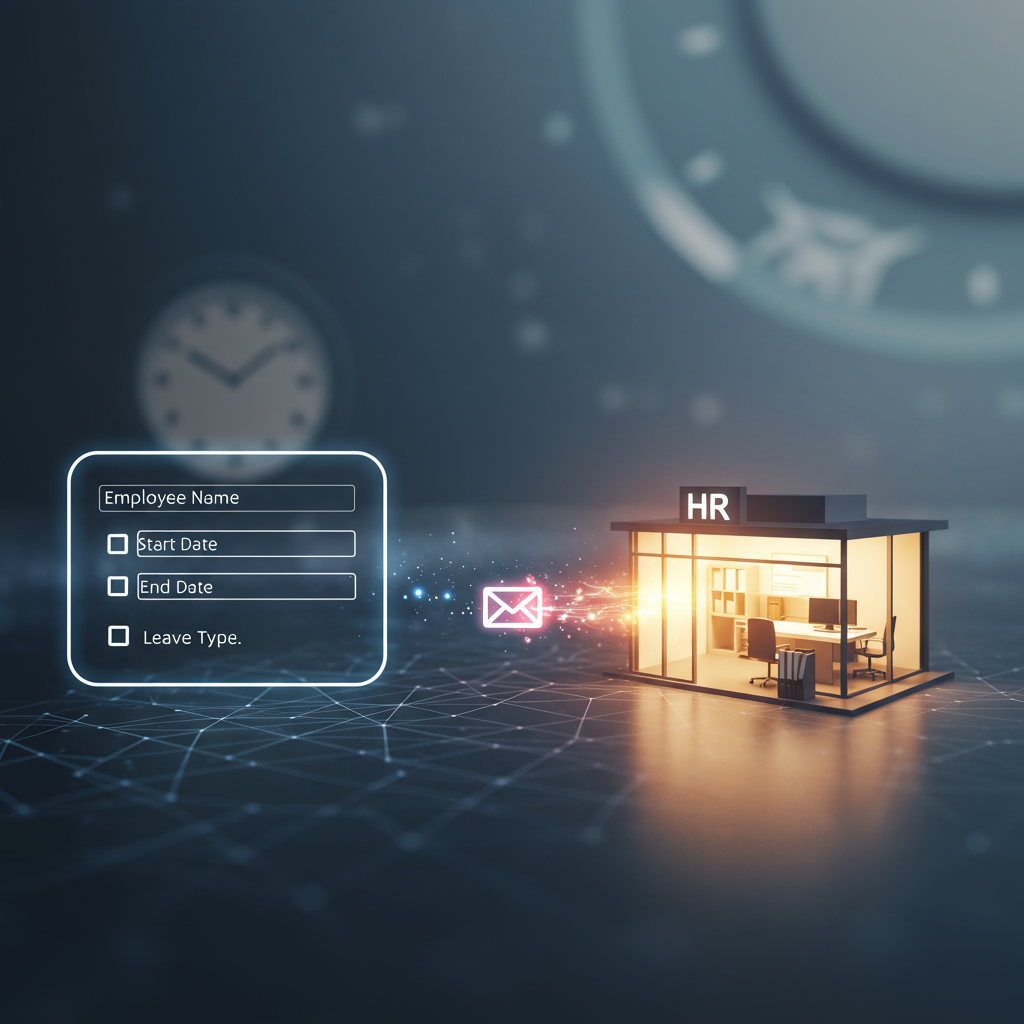
Imagine this: An employee fills out a quick online form, clicks 'Submit,' and *bam* – you get an email with all the details. No more paper, no more digging through inboxes, just a clean, organized notification waiting for you.
Here's how you can build this yourself:
- Create a 'Leave Requests' Tab (or Sheet): This is your central data repository. Think of it as your digital filing cabinet. In GraceBlocks, this would be setting up your data structure.
- Design Your Form: Now, what information do you need? Common fields include:
- Employee Name: Obviously, who's taking leave.
- Start Date: When does the leave begin?
- End Date: When does the leave end?
- Leave Type: Vacation, sick leave, personal day?
- Reason (Optional): A brief explanation can be helpful.
- Link the Form to Your 'Leave Requests' Tab: This is the crucial step. You need to tell the system where to store the data from the form. When someone submits the form, the information automatically gets added to your 'Leave Requests' tab.
- Configure Email Notifications: This is the automation magic. You want an email to be sent to HR (or whoever manages leave) whenever a new form is submitted. Most form builders (including GraceBlocks) have settings for this. You'll need to specify the recipient's email address and customize the email subject and body. Include all relevant information from the form in the email. Think something like:
Subject: New Leave Request from [Employee Name]
Body: Employee Name: [Employee Name]
Start Date: [Start Date]
End Date: [End Date]
Leave Type: [Leave Type]
Reason: [Reason]
Why this matters? It’s faster, it's cleaner, and it drastically reduces the chances of errors. No more deciphering handwriting on crumpled forms! Plus, it's all in one place, making it easy to track employee time off.
GraceBlocks to the Rescue: This is exactly the kind of thing GraceBlocks is built for. It's a platform where you can build your own custom databases and workflows. You can define your data structure, workflows, automated AI processing and integrated communication with email or SMS messaging. You can create the 'Leave Requests' tab, design the form, link them together, and configure the email notifications – all within one platform. Think of it as building your own custom HR management tool, without needing to code.
Start small. Automate this one process. See how much time it saves you. Then, start looking at other areas where you can apply the same principles. You'll be amazed at how much more efficient your HR team can be.


.jpg)
Comments
Post a Comment